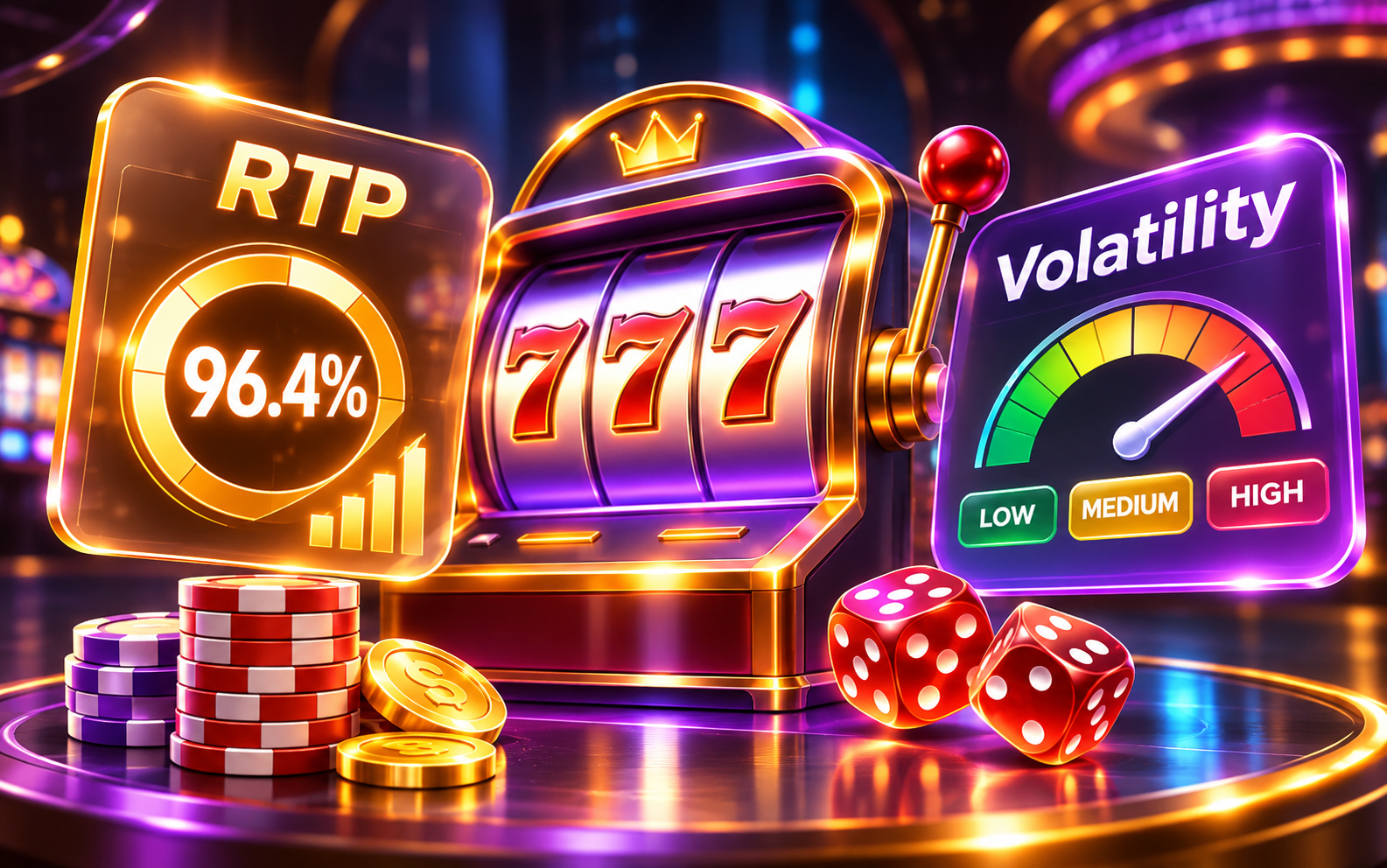
Two pokies can have exactly the same return to player percentage and still feel nothing alike. One ticks along with small wins every few spins, keeping your balance fairly steady for an hour. The other goes quiet for long stretches, then suddenly delivers a feature worth a hundred times your stake. The difference comes down to a second number that many players overlook. With RTP and volatility explained together, it becomes much easier to understand why games behave the way they do and to choose ones that suit you.
This guide breaks both concepts down in plain English. It covers what RTP measures and what it does not, how volatility shapes the rhythm of a game, how hit frequency and maximum win fit into the picture and how to use these numbers together when picking pokies. By the end, you will be able to read any game’s information screen with confidence.
Return to Player in Simple Terms
Return to player, or RTP, is the percentage of all money wagered on a game that it is designed to pay back to players over a very long period. A pokie with an RTP of 96 percent is built to return about 96 dollars for every 100 dollars wagered across millions of spins. The remaining 4 percent is the house edge.
The key phrase is over a very long period. RTP is calculated across an enormous number of spins, far more than any individual player will ever make. In a single session, results can be well above or well below the published figure. RTP describes the game’s overall design, not what will happen to you tonight.
Why RTP Still Matters
Even though RTP does not predict short term results, it is a reliable way to compare games. Over many sessions, choosing pokies with a higher RTP means the games are designed to keep less of what you wager. For regular players, that difference adds up.
To see why, imagine wagering 1,000 dollars in total across many sessions. On a game with a 97 percent RTP, the expected long term cost is about 30 dollars. On a game with a 94 percent RTP, it rises to about 60 dollars. With RTP and volatility explained through simple examples like this, the value of checking the numbers becomes much clearer.
Volatility in Simple Terms
Volatility, sometimes called variance, describes how a game distributes its payouts. Low volatility games pay smaller wins frequently. Medium volatility games offer a balance of regular smaller wins and occasional larger ones. High volatility games pay less often, but their wins can be much bigger when they arrive.
A useful way to picture it is to imagine two paths up the same hill. RTP tells you how high the hill is. Volatility tells you whether the path is a smooth, gentle slope or a rocky trail with steep climbs and sudden drops. Both paths reach the same height over time, but the journey feels very different.
Once you have RTP and volatility explained in this way, it becomes easier to understand why your experience on two similar looking games can be so different. The hill is the same height, but the path you take to climb it changes everything about how the session feels.
How RTP and Volatility Work Together
With RTP and volatility explained side by side, it becomes clear why they should always be considered together. Two games might each have a 96 percent RTP, but a low volatility game will usually give you a longer, steadier session on a fixed budget, while a high volatility game may burn through that budget quickly before delivering a large feature, or may not deliver one at all during your session.
Neither type is better in general. Low volatility suits players who want relaxed, extended play. High volatility suits those who enjoy anticipation and are comfortable with bigger swings. The right choice depends on your budget, your patience and your mood on the day.
Hit Frequency and What It Tells You
Hit frequency is the percentage of spins that produce a win of any size. A game with a 30 percent hit frequency pays something on roughly one in every three spins on average. Some games publish this figure, while others leave it out.
Hit frequency is closely linked to volatility. Low volatility games tend to have higher hit frequencies, while high volatility games often have lower ones. Keep in mind that a win does not always mean profit. Many small wins return less than your stake, so a high hit frequency does not guarantee a growing balance.
Maximum Win as a Volatility Clue
Many modern pokies display a maximum win, usually expressed as a multiple of your stake, such as 2,500 or 10,000 times. This figure shows the highest possible result in a single spin or feature. A very high maximum win often points to a high volatility game, since the design must balance those rare large wins with long periods of smaller returns.
Maximum wins are designed to be extremely rare. They are best viewed as an indicator of a game’s character rather than a realistic target.
Reading a Game’s Information Screen
Most pokies include an information or paytable screen, usually accessed through a small icon. This screen typically lists the RTP, describes the volatility using words or a visual scale, explains every feature and shows symbol values. Some games also mention hit frequency and maximum win.
Taking a minute to read this screen before playing gives you a clear sense of what to expect. It also helps you spot features that may change the RTP, such as bonus buys or optional extra bets.
Why RTP Can Differ Between Casinos
Many studios release the same game with several RTP settings, allowing casinos to choose which version to offer. The game looks identical, but its long term return can vary by a few percent. Always check the RTP inside the game itself rather than relying on figures from reviews or other websites.
Putting the Numbers to Work
Start by deciding what kind of session you want. For a long, relaxed session on a modest budget, look for a game with a solid RTP and low or medium volatility. For a shorter session with the potential for dramatic moments, a high volatility game with a strong RTP may suit you better.
Then match your stake to the volatility. On high volatility games, a smaller stake helps your budget last long enough to reach the features. On low volatility games, you may be comfortable with a slightly higher stake, since frequent wins help keep your balance steady.
Comparing Games at IWIN33 Casino
The best way to see RTP and volatility in action is to compare a few different games yourself. For Australian players who like to understand what they are playing, IWIN33 Casino offers a wide range of pokies alongside live casino tables and other games in one account that works smoothly on mobile and desktop.
Open the information screens of several games, note their RTP and volatility and try a handful of spins at a modest stake on each. You will quickly notice how differently a low volatility game and a high volatility game feel, even when their RTP is similar.
Questions About Game Numbers
If you cannot find a game’s RTP or volatility rating, or you want help comparing two titles, you can send IWIN33 live chat your questions about RTP and get a clear answer. Understanding the numbers makes every choice more confident.
Common Misunderstandings
One frequent misunderstanding is that a high RTP game will pay out soon after a losing streak. Every spin is independent, so a game never owes you a win. Another is that volatility changes depending on how much you bet. In most games, volatility stays the same at every stake, while only the size of wins and losses changes.
Some players also assume that low volatility means low risk. Even low volatility games carry a house edge, and losses can still add up over time.
Know the Numbers, Keep the Limits
With RTP and volatility explained, you have two of the most useful tools for choosing pokies wisely. Yet no number can turn gambling into a reliable way to make money. Use RTP and volatility to pick games that suit your style, then enjoy them purely as entertainment.
Set your budget and time limit before every session and stop when you reach either one. If you notice yourself chasing losses, increasing stakes during quiet runs or playing longer than planned, take a break and use the deposit limit and time out tools in your account. Knowledge and limits together make every session more relaxed and enjoyable.